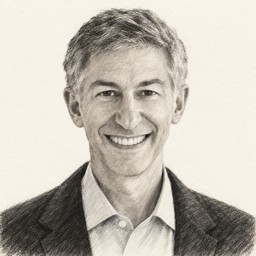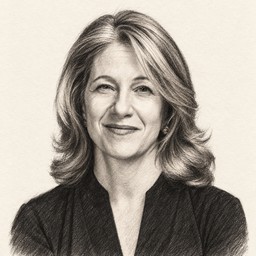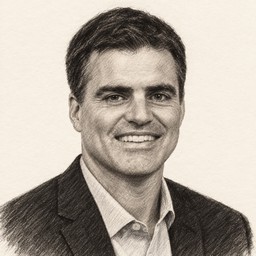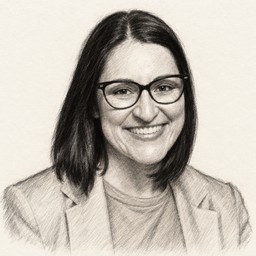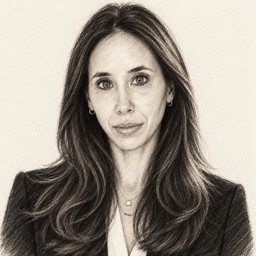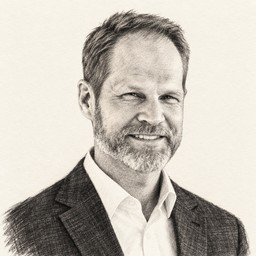
Rob Beard
Chief Strategy and Legal Affairs Officer, Coherent Corp.
Rob Beard is Chief Strategy and Legal Affairs Officer at Coherent. He joined the company in 2024, initially serving as Chief Legal and Global Affairs Officer.
Prior to joining Coherent, Rob was Chief Legal and Global Affairs Officer at Mastercard, where he led the company’s global legal, government affairs, and policy teams and was a member of Mastercard’s Management Committee. Prior to Mastercard, Rob spent nearly a decade at Micron Technology, where he held several leadership roles within the legal organization, ultimately serving as General Counsel and Corporate Secretary.
After clerking on the U.S. Court of Appeals for the Ninth Circuit, Mr. Beard began his corporate legal career as an associate in Shearman & Sterling’s London office, before moving to Weil, Gotshal & Manges. He graduated from the University of Utah and received his Juris Doctor from the University of Illinois College of Law, summa cum laude.
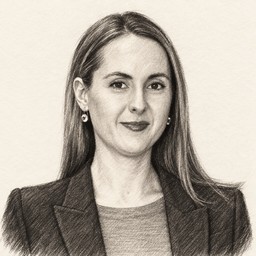
Danielle Benecke
Founder & Global Head, Applied AI, Baker McKenzie
Danielle Benecke is the Founder and global head of Baker McKenzie’s Machine Learning Practice, an industry-leading venture that combines the firm’s legal domain expertise with advanced data science and machine learning. She was previously a senior lawyer in Baker McKenzie’s IP and Technology Practice and a regional leader of its Reinvent innovation program. Danielle has also served on the firm’s Global Digital Media and Copyright Steering Committee and North America IP and Technology leadership team. Danielle has a Masters of Law, Science, and Technology from Stanford University, where she was previously a member of the Graduate School of Business’ Venture Studio and a Fellow of the Legal Design Lab and has served as venture coach in CodeX’s AI and Law program.
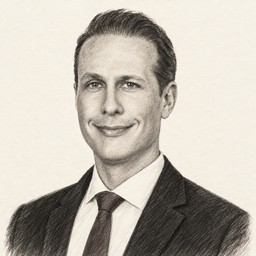
Hugh Carlson
Chief Executive Officer, Three Crowns
Hugh Carlson is the CEO and General Counsel of Three Crowns LLP. Since joining at the firm’s launch in 2014, he has helped build Three Crowns from a start-up boutique into one of the world’s premier dispute resolution practices.
A software engineer before he was a lawyer, Hugh has made technology a defining feature of the firm, which uses Claude Code and OpenAI Codex to build its own software around how it practices. Microsoft has called Three Crowns an “AI-powered company … bending the curve on innovation.” The firm has won two Financial Times Innovative Lawyers awards in under a year. The first, at the 2025 North America awards, recognized an AI-powered cross-examination training platform that Hugh co-led with Stanford’s liftlab. The second, at the 2026 Europe awards, recognized Prelude, a business development platform. The FT has also shortlisted Hugh as Intrapreneur at its 2026 North America awards.
Hugh has lectured at Harvard Law School since 2019. He is a Certified Information Systems Security Professional (CISSP).
Hugh co-founded Generative Legal with Robert Mahari.
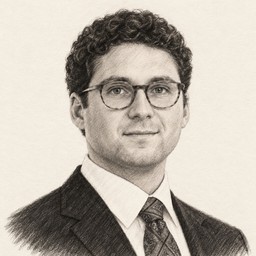
Joseph Caruso
Lead Legal Engineer, Harvey
Joe Caruso is a Lead Legal Engineer at Harvey. In this role, Joe helps shape and execute on Harvey’s product and go-to-market initiatives. He has helped inform AI strategy and drive lawyer adoption of AI at the world’s largest law firms and corporate legal departments. Prior to joining Harvey, Joe practiced as a litigator at both Skadden Arps and Kirkland & Ellis. His practice focused primarily on trial work in the product liability and False Claims Act settings.
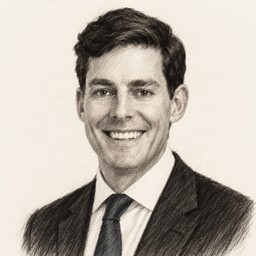
Kurt Chauviere
Senior Managing Director, Blackstone
Kurt Chauviere is a Senior Managing Director at Blackstone. He previously served as a partner at McKinsey and BCG, and he received his bachelor and law degrees from Harvard.
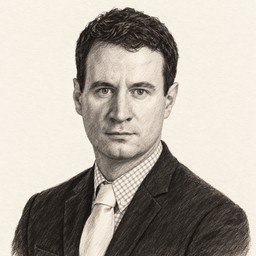
Simon Consedine
Partner, Three Crowns
Simon is a partner in Three Crowns’ Washington, DC office. He has significant experience in commercial arbitration and investment arbitrations, having represented clients across a wide range of sectors. Simon is recognised in Lexology Index as a global leader for Arbitration. Simon has been recognised for International Arbitration in The Legal 500 US since 2020 and clients have described him as having “formidable analytical skills and great client service”.
Simon co-authored the chapter “Fair and Equitable Treatment: Legitimate Expectations and Transparency” in ICSID’s 50th anniversary text Building International Investment Law: The First 50 Years of ICSID. He sits on the Banking and Financial Services Committee for the International Institute for Conflict Prevention & Resolution (CPR). Simon received his LLM from Columbia Law School, where he studied as a Fulbright scholar. Before that, he received an LLB with first-class honours and a BA with first-class honours from the University of Canterbury in New Zealand. He speaks English and French, and is admitted to practice in Washington, DC, New York, and New Zealand.

Omar Haroun
Co-founder & Chief Executive Officer, Eudia
Omar Haroun is the Co-Founder and CEO of Eudia, the applied AI platform purpose-built for highly regulated enterprises and government agencies. Eudia eliminates structural friction across legal, procurement, and compliance functions—replacing static playbooks with a custom ontology that encodes an organization’s actual risk appetite to accelerate deal velocity, protect commercial margins, and transform legal departments into drivers of top-line business growth. Under his leadership, Eudia raised $105 million from top investors, including General Catalyst, Floodgate, and Sierra Ventures. Previously, Omar co-founded Text IQ, a pioneering AI company serving Global 2000 legal and compliance teams, which was acquired by Relativity in 2021. Omar’s work sits at the intersection of artificial intelligence, enterprise software, and commercial strategy. He holds a J.D. and MBA from Columbia University, a master’s degree from the University of Oxford, and a B.A. from UC Berkeley. He was recognized as a Champion of Change by the White House and by Goldman Sachs as one of its Most Exceptional Entrepreneurs of 2025.
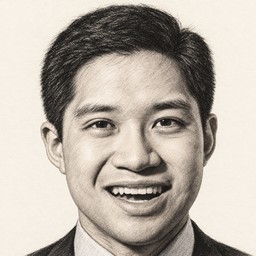
David Lat
Founder and Writer, Original Jurisdiction
David Lat is a lawyer turned writer. He publishes Original Jurisdiction, a newsletter about law and legal affairs, and hosts a companion podcast of the same name. His work has also appeared in The New York Times, The Washington Post, The Wall Street Journal, and Bloomberg Law, where he is a columnist. Prior to launching Original Jurisdiction, David founded Above the Law, one of the nation’s most widely read legal news websites, and Underneath Their Robes, a popular blog about federal judges that he wrote under a pseudonym.
Before entering the media world, David worked as a federal prosecutor in Newark, New Jersey; a litigation associate at Wachtell, Lipton, Rosen & Katz, in New York; and a law clerk to Judge Diarmuid F. O’Scannlain of the U.S. Court of Appeals for the Ninth Circuit. David graduated from Harvard College and Yale Law School, where he served as an editor of the Yale Law Journal.
Ilona Logvinova
Chief AI Officer, Herbert Smith Freehills Kramer
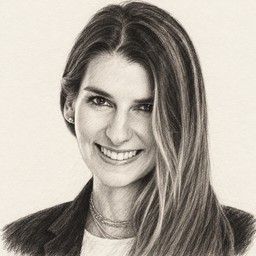
Ilona Logvinova is the Chief AI Officer at HSF Kramer, leading the firm’s AI strategy and integration across its global practices. A recognized leader at the intersection of AI, law, and innovation, she has driven transformative AI initiatives across the legal industry. Prior to HSF Kramer, Ilona led AI innovation and transformation at Cleary Gottlieb, including oversight of the firm’s in-house AI development team following its acquisition of Springbok.ai. She previously held leadership roles at McKinsey Digital and McKinsey Legal and earlier served as Senior Counsel at Mastercard and as an associate at Fried Frank. Ilona advises Legal AI startups and growth-stage companies, serves on industry advisory boards, and is a frequent speaker and author on AI and legal innovation. She holds a BA in Economics and Philosophy from Columbia University and a JD from the Benjamin N. Cardozo School of Law.
Robert Mahari
Head of Claude for Legal, Anthropic
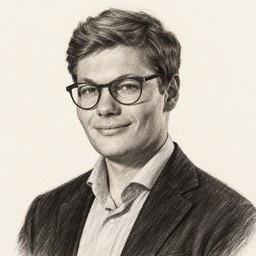
Robert Mahari is the Head of Claude for Legal at Anthropic, where he shapes how Claude serves law firms, in-house legal teams, and legal tech companies—spanning product and go-to-market. He is the founder of Akiva AI, a company that develops bespoke AI solutions for law firms and in-house legal teams.
Previously, Robert served as Associate Director of Stanford CodeX—the Stanford Center for Legal Informatics—where he led practice-oriented, interdisciplinary research at the intersection of AI and law. He holds a JD-PhD in Legal Artificial Intelligence from Harvard Law School and the MIT Media Lab, training that anchors his dual fluency in computer science and legal doctrine.
Robert works with legal leaders, technologists, and policymakers to design AI systems that improve legal practice, surface new institutional insights, and embed governance into technology by design. His work has been published across disciplines, including in Science and Nature Machine Intelligence, and is regularly featured in outlets such as The New York Times and The Washington Post.
Robert co-founded Generative Legal with Hugh Carlson.
Bridget McCormack
General Manager, Judiciary, Clio
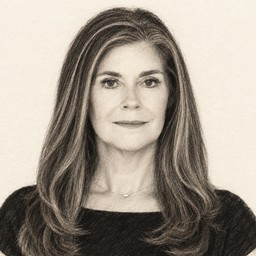
Bridget McCormack is General Manager, Judiciary at Clio, bringing more than three decades of experience across the legal and justice systems to Clio’s expansion into the judiciary.
She previously served as President and CEO of AAA-ICDR and spent a decade on the Michigan Supreme Court, including four years as Chief Justice. Before taking the bench, she spent two decades as a legal aid attorney, public defender, and law professor, where she founded innovative clinical programs including the Michigan Innocence Clinic, the nation’s first non-DNA innocence project, to improve access to justice.
McCormack has led major efforts to modernize courts, including launching the nation’s first statewide online dispute resolution platform, and has held national leadership roles advancing judicial technology and innovation. She is a prominent voice on AI and the future of law, advising institutions including the National Center for State Courts, the American Bar Association, and Duke Law School’s Responsible AI in Legal Services initiative.
David Reiss
Wheelock Family Clinical Professor of Entrepreneurship Law, Cornell Tech
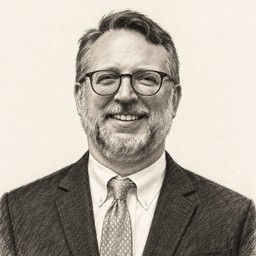
David Reiss is the Wheelock Family Clinical Professor of Entrepreneurship Law and Acting Director of the Blassberg-Rice Center on Entrepreneurship Law at Cornell Tech and Cornell Law School, where he is also affiliated faculty with the Center for Law and AI. His clinical work focuses on how to train new lawyers to responsibly use generative AI in real client matters. He teaches Cornell’s Entrepreneurship Law Seminar and Clinic and High Growth Corporate Transactions. He has written on AI and legal practice for Bloomberg Law, Law360, the National Law Review, and Corporate Compliance Insights, and has presented on integrating AI into transactional practice at the AALS Clinical Conference and other venues. Before joining Cornell in 2024, he spent more than two decades on the Brooklyn Law School faculty. He practiced law at Paul, Weiss, Rifkind, Wharton & Garrison and at Morrison & Foerster. He is a member of the American Law Institute and holds a J.D. from NYU School of Law and a B.A. from Williams College.
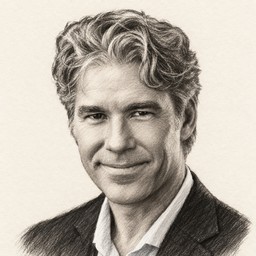
Damien Riehl
Solutions Champion, Clio
Damien Riehl is a technology lawyer who clerked for state and federal judges, litigated for 15 years, and helped companies with cybersecurity. At Clio, Damien and his team combine the Business of Law and Practice of Law, using Generative AI to extract and generate valuable insights from a dataset of over one billion legal documents worldwide. At SALI and FOLIO, Damien has built and expanded an ontology of over 18,000 legal tags, effectively standardizing legal data.
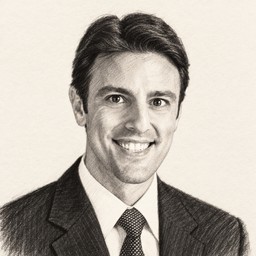
Kevin Schwartz
Partner, Wachtell, Lipton, Rosen & Katz
Kevin Schwartz is a member of the Executive Committee and a partner in the Litigation Department of Wachtell, Lipton, Rosen & Katz. He is also a Visiting Lecturer in Law at Yale Law School, and served as Chair of the Board of Directors of the New York City Bar Association. Mr. Schwartz’s practice includes corporate, commercial, and securities litigation at both the trial and appellate levels, as well as a variety of regulatory and corporate governance matters that include leading the firm’s specialized Crypto Team to address rapidly changing issues generated by the crypto asset industry. Mr. Schwartz received his B.A. from Harvard College and was awarded the Sophia Freund Prize as the top-ranked summa cum laude graduate. Mr. Schwartz served as a law clerk to Justice Ruth Bader Ginsburg on the Supreme Court of the United States and to Judge Guido Calabresi on the United States Court of Appeals for the Second Circuit.
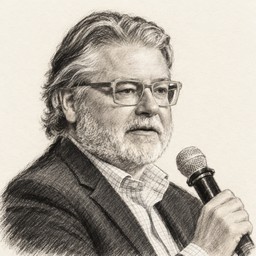
Lucky Vidmar
Head of IP and AI Litigation and Associate General Counsel, Microsoft
Lucky is Associate General Counsel at Microsoft where he leads a team managing the company’s global patent, trademark, copyright, trade secrets, and AI litigation docket. Previously, Lucky was a VP and Technology Counsel at Western Union managing its IP portfolio and key technology vendor relationships, and before that, a partner in Hogan Lovells’ IP litigation practice group. Before becoming a lawyer, Lucky worked in the software industry for nearly 10 years, and published peer reviewed papers in the area of machine learning and AI. Lucky holds bachelor’s and master’s degrees in Computer Science from the University of Colorado at Boulder, and a J.D. from the University of Denver College of Law.
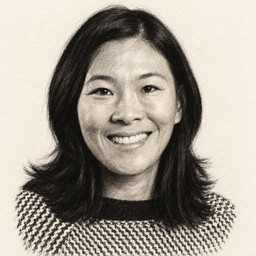
Michele Wong
Head of Technology & Products Legal Affairs, Ericsson
Michele Wong is the Head of Technology & Products Legal Affairs at Ericsson. She leads a global team of lawyers and legal professionals responsible for advising core business and engineering – Ericsson Networks and Cloud Software & Services divisions. Michele also serves on the Executive Leadership Teams for both the Networks and Cloud Software & Services divisions. Focused on a wide range of telecommunication, commercial, and technology-related matters, she regularly counsels on product development and innovation strategy, negotiating and drafting critical technology agreements and ensuring compliance with international regulation.